Every March, the NCAA March Madness college basketball tournament captures the attention of millions.
In 2026, it is estimated that the average fan will spend over 1.5 hours daily tracking scores and brackets.
While the tournament is a massive cultural phenomenon, it is also a significant source of anxiety. Recent wellness surveys show that over 60% of dedicated fans report elevated stress, sleep disruption, and irritability during the three weeks of the tournament.
It’s a strange phenomenon.
We know the games are just for fun, and we know that cheering brings us together, but that doesn’t stop us from pacing the living room or throwing our remotes at the TV when a 19-year-old on a court a country away misses a free throw.
In this blog we'll cover why do we react so intensely to things we cannot change and (more importantly) how can we use this season as a masterclass in reclaiming our agency.
Why the Tournament Triggers the Brain
Your brain is a pattern-matching machine.
It is hardwired to seek out "the win" and avoid the "threat" of the loss. When you watch a game, your brain doesn't always distinguish between a basketball game and a real-world crisis; it processes the "upset"—a 16-seed beating a 1-seed—as a disruption in the expected order of the world.
This triggers a dopamine spike when things go our way, but it also triggers a cortisol spike when they don't.
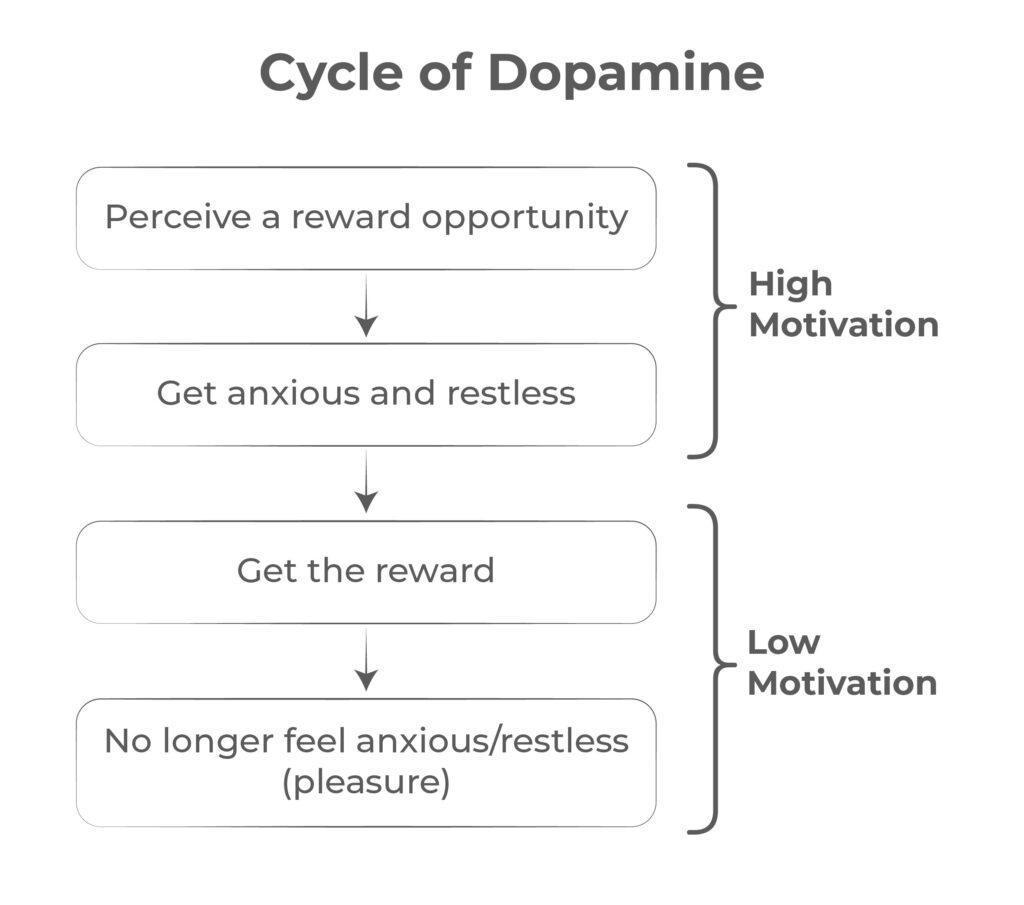
When your sense of well-being is tied to the performance of players on a court miles away, we feel like our intensity matters, as if by worrying harder, we can force the ball into the hoop.
It’s a cognitive illusion as we mistake our internal agitation for productive action.
But don't worry, there is something that can help.
The Sphere of Control
The concept of the "Sphere of Control" has roots that trace back to Stoic philosophy—specifically the work of Epictetus, who taught that the fundamental path to peace is distinguishing between what we can influence and what we cannot.
In modern psychological terms, it’s a two-circle framework:
- The Sphere of Concern (The Outer Circle): This includes everything you worry about but cannot directly change: the outcome of a game, the economy, the opinions of others, or past mistakes.
- The Sphere of Control (The Inner Circle): This includes everything you have the power to influence: your own reactions, your boundaries, your daily focus, and your physical care.
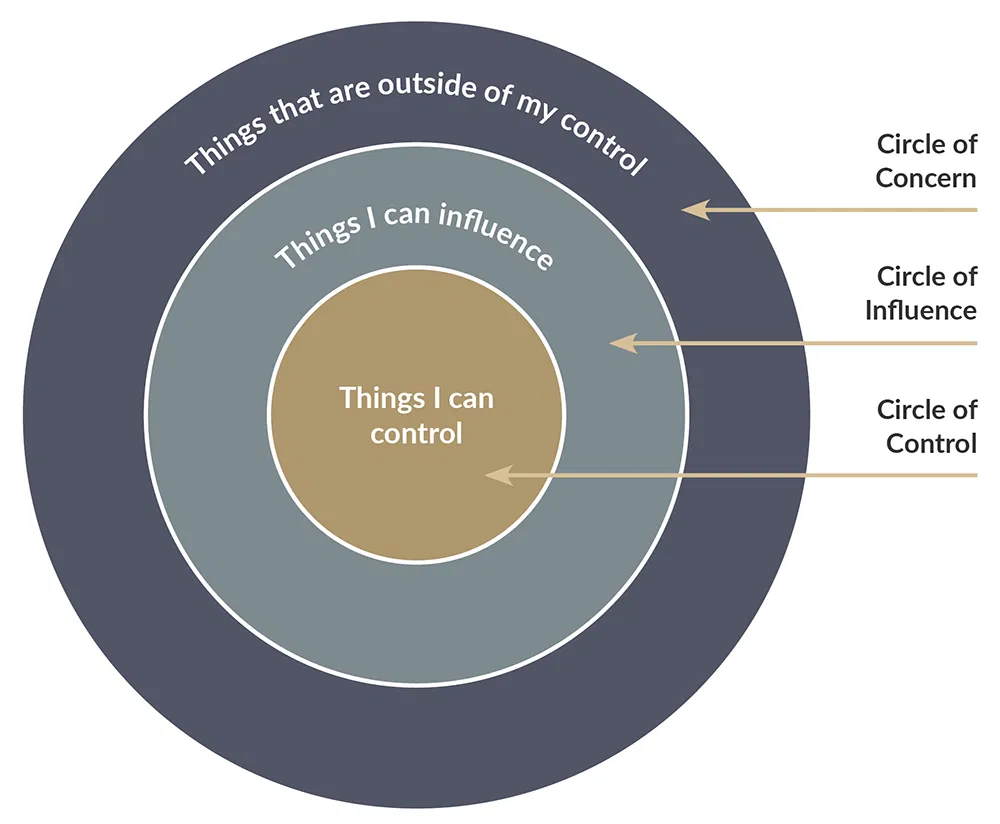
The "Madness" of March is a high-speed test of whether you can keep your focus inside that inner circle while the world goes crazy in the outer one.
When we spend our energy in the outer circle, we feel helpless. When we focus on the inner circle, we feel grounded and capable.
But... how...?
Working Within Your Sphere of Control
You don’t have to "solve" your stress instantly. You just need a process to pivot your focus.
If you find yourself losing your cool, whether it's over a basketball game, a work project, or a personal relationship, ollow these steps:
- The Triage Pause: The moment you feel tension rising, stop. Explicitly name the feeling: "I am stressed because I am focused on an outcome I cannot control." This simple labeling creates the distance necessary to think clearly.
- The Audit: On a piece of paper, draw two columns: Control and No Control. List everything currently weighing on you. If the item involves someone else’s choices or an external result, place it firmly in No Control.
- The Agency Shift: Look at your No Control list and consciously choose to stop feeding it energy. Then, pick one item from your Control column (the most important one) and identify the smallest, most immediate action you can take to influence it.
- The Micro-Win: Execute that action immediately. If you're stressed about a tournament bracket, your action isn't "worrying about the team." It’s "turning off the TV to get 30 minutes of sleep." If you’re stressed about a high-stakes project or a difficult conversation, it’s not "worrying about the potential negative outcome," it’s "completing the single next step I’ve been putting off." Focusing on the micro-win moves you from paralysis to momentum.
Conclusion/TL;DR
March doesn't have to be "mad." We get triggered because our brains confuse "caring" with "controlling."
- Worrying about things you can't control (like game outcomes or other people's decisions) is an illusion of productivity that only drains your battery.
- Use the Sphere of Control to separate your concerns from your agency.
- When stressed, use the Triage, Audit, Shift, and Execute process to turn anxious energy into a small, meaningful micro-win.
By narrowing your focus to what you can actually influence, you move from being a spectator of your own stress to the author of your own experience.
To get more reflections, tools, and lived-experience experiments, you can subscribe to the email list at thejeffturner.ca.
If you’re looking to take a bigger step in managing overthinking, check out the FREE Front-Line Worker’s Guide to Managing Overthinking.
Until next time. I’m Jeff, and remember to take care of yourself, however that looks to you.