October 29 is the International Day of Care and Support, a day set aside to recognise paid and unpaid care work.
Thanking carers is easy. Helping one is a different skill. I learned that watching someone up close.
A few years back, I was supporting someone looking after his dad after a stroke.
Cooking, bathing, appointments, middle-of-the-night phone calls. It was like his whole life narrowed down to one house and one person.
And everybody said the same thing to him...
"Let me know if you need anything."
Months later he told me something I was not prepared for. He said:
The caregiving was hard, yeah.
But the harder part was managing everyone else's good intentions.
He had a phone full of people offering everything in general and nothing in particular, and he was too tired to turn any of it into an actual ask.
So he didn't. He just said "thanks, appreciate it" and kept going.
One person was different. A neighbour started dropping off food every once in a while and taking his garbage bins to the curb on the way out. They never once said the line.
She was the only one who actually helped.
Why the kindest line in the world doesn't work
I have said this line myself. Plenty of times. I meant every word of it.
And I have learned, slowly and from the wrong side of it, that it fails for three plain reasons.
First, it hands the work back to the person who is already drowning.
"Let me know if you need anything" sounds generous, but what it really asks is: figure out what you need, find the courage to ask a proud person for it, and risk hearing no.
That is a job. You just gave it to someone working a second unpaid shift.
Second, it is so vague it evaporates. "Anything" means nothing.
Nobody has ever woken up at 2 a.m. and thought, "You know what, I should call Dave about the 'anything' he offered in March."
Third (and this is the uncomfortable one) it mostly helps the person saying it...
It lets you walk away feeling like a good friend without doing a single concrete thing.
Carers can tell the difference.
They always can.
Here is the thing most people miss about caregivers: they usually will not ask.
Not because they are stubborn (though some are).
Because they do not know what they need on any given Tuesday, because asking feels like admitting they cannot handle it, or because they are simply too tired to manage one more person.
Waiting for them to ask is waiting for something that is probably never coming.
The numbers behind it are worth sitting with: women do about 76 percent of the world's unpaid care work, and that unpaid work is worth roughly $1.5 trillion a year. The whole world runs on people like my friend. The least the rest of us can do is be specific.
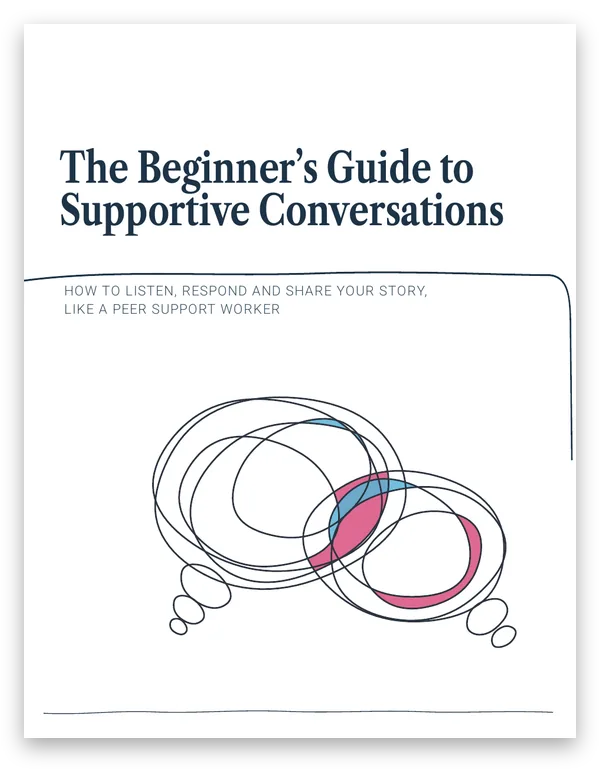
Get the Beginner's Guide to Supportive Conversations — free
6 listening skills, fill-in templates for the hard moments, and the 4-part formula for sharing your story without oversharing. Free PDF, sent straight to your inbox.
What to do instead
You do not need to be a hero. You need to be specific, and you need to come back. Three skills, all of them low effort, all of them things I wish someone had done for my friend.
1. Name the task and the time
Vague offers die. Specific offers live.
Pick one recurring thing and take it off their plate on a schedule. Groceries on Saturdays. Bins on garbage day. A ride to the Thursday appointment. School pickup on Fridays.
Then say it like this: "I'm bringing dinner Thursday around six. You don't need to feed me, talk to me, or even answer the door if you're wiped."
Notice what that sentence does. It removes every decision from them. No "what do you need," no "when works for you," no performance of gratitude required.
You decided. They just receive.
If you are not sure what task to pick, pick food. It is almost always food. A carer who is skipping their own meals will not ask you for a casserole, but they will eat one if it shows up.
2. Ask about the carer, not the patient
Everybody asks how dad is. Almost nobody asks how he is.
Next time you talk to a caregiver, ask "How are YOU holding up this week?" And then actually wait. Do not fill the silence. Do not pivot to advice. Do not tell them about your aunt who went through the same thing.
This is the listening skill I wrote about in my post on how to support someone who's struggling.
Hearing the whole thing, without fixing it, is rarer than people think. For a carer who spends all day being needed, ten minutes of being heard is not a small thing.
It might be the only ten minutes of their week where they are not the strong one.
3. Check in twice
Anyone can check in once. That is just good manners.
The second check-in is the one that matters, because by then everyone else has moved on and the casseroles have stopped.
After you help once, try setting a phone reminder for three days later. Then check in again with something specific, not "how are you." Try "Did your dad's appointment go okay yesterday?" or "Is Tuesday still the hard day?"
Specific questions tell a carer you were actually listening. Generic ones tell them you were performing concern.
Support isn't a sentiment. It's a schedule. The first check-in is manners. The second one is medicine.
The line to retire
"Let me know if you need anything" is a door you make someone else open. Stop building doors. Just show up with the lasagna, take the bins out on your way past, and come back on Tuesday.
That is what support looks like when it actually lands. A specific thing, at a specific time, twice.
Peer support creates connection. Connection creates community. Community defeats stigma. And sometimes community is just one neighbour who never said the line, but kept showing up anyway.
If the second-check-in thing hit home, the Beginner's Guide to Supportive Conversations has the full toolkit: the listening skills, the fill-in templates, and a simple formula for sharing your own story without oversharing.
It's free, and it's the most useful thing I've put together from my years on the front lines. You can find it on my guides page.
Until next time, I'm Jeff — take care of yourself, however that looks for you.
FAQ
What should I say instead of "let me know if you need anything"?
Name a specific task and a time: "I'm bringing dinner Thursday around six." Specific offers get accepted. Vague offers get thanked and forgotten.
What if the caregiver says they're fine?
Believe them in the moment, and come back anyway. "Fine" is often what a tired person says to end a conversation. Help once, then check in again a few days later with something specific. The second check-in is where the truth usually shows up.
I don't live nearby. How can I help from far away?
Distance help still works if it's specific: a grocery delivery order, a meal delivery gift card, paying for a cleaning service for one month, or a scheduled weekly call that they don't have to initiate. The rule is the same: decide the thing, remove the decisions from them.
How often should I check in?
More often than you think, and on a schedule rather than when you happen to remember. Once a week, same day, beats a burst of attention followed by silence. Caregiving is long. Support that lasts has to be long too.